Reading town
It is in the towns that the ongoing costs of England’s endless wars are being most keenly felt. The Exchequer is bankrupt and Privy Council has ordered the silver coinage to be debased by alloying with copper. This is causing price inflation — costers will not part with a pennyworth of apples for the new penny coin, and this is a widespread source of unrest.
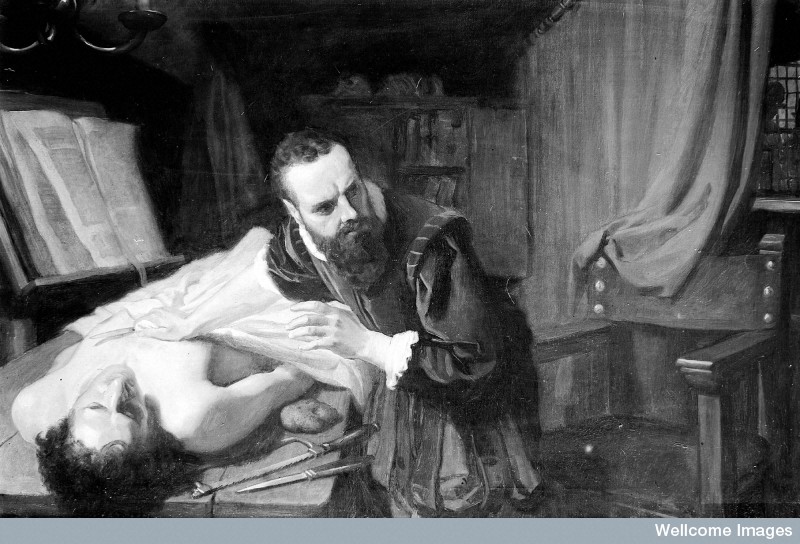
My map of the town of Reading (see below — you must excuse the wine stain) shows my father’s house in Broad Street, the Minster Church of St Mary, which has stood in the town since before the conquest, and Brother Gregory’s apothecary shop in Minster Street. The River Kennet runs through the town in several streams, including, in its most northerly branch, the Holy Brook, which turns the Abbey Mill. The Kennet runs into the Thames just east of the abbey precinct.
Inquests are often held in the old Hospitium, within the grounds of the former Reading Abbey, which was one of the largest abbeys in England — bigger than Westminster Abbey, and founded by Henry I, the son of the Conqueror. But its historical importance did not save it. It was dissolved by Henry VIII in 1539, when the abbot, Hugh Farringdon, who was one of only four abbots in England not to surrender their abbeys to the king, was hanged, drawn and quartered outside the abbey gates. My father was one of the crowd of townspeople that witnessed this gruesome spectacle. I was studying at Oxford University at this time, and so was not present.
The countryside
In the countryside, the traditional manorial system of land allocation means that most rural peasants hold land as tenants of the local lord. They can grow enough to feed their families by working their allocated crop strips within huge open fields, and they can graze their few beasts on common pasture within the manorial estate. This is in exchange for some rent (either in money or labour) paid to the lord.
But wool prices have increased hugely in recent years, and this is encouraging manorial lords to do away with tenants’ crop strips and fence off the open fields so that they can be used instead for a more profitable purpose: sheep farming. This is called land enclosure. As a result, many of the common men have no land to grow their food, nor the means to buy any. Starvation threatens.
This rural poverty is creating much unrest among the common man, and it continues to grow across many areas of England, driving some men to come together in groups and tear down the new fences and hedges that enclose the former open fields. Such groups are called commotioners.
It is particularly serious in places where the commotioners are banding together.
Privy Council is well aware of this problem, but cannot find a reliable means to solve it. They hope to appease the common man, but this cannot be done without reducing the wealth of the lords who control Privy Council. Contradictory edicts are bring posted by the Lord Protector, who cannot do right for doing wrong, both in the eyes of the people and in the eyes of the lords.
The situation is dire. Norfolk is a particularly dangerous case.

Religion
Religion is in turmoil too. Old King Henry separated the English church from Rome but kept religious practices little changed. There was some resistance to the dissolution of the monasteries (particularly in the north of England), but many people felt that some of them had become little more than bloated property owners with very few monks living in relative luxury.
It was not until Edward VI came to the throne in 1547 that the red-hot reformers began to get a free hand. Lately, they have been driving major changes, and this is causing much unrest.
Churches are being stripped of their decorations, their stained glass windows and their statues. Altars are being whitewashed, by order of the king.
Church services now must be held in English (not Latin) with participation from the congregation (a new concept), and the services must emphasise sermon preaching and bible readings (totally new and unfamiliar ideas). Every church must hold a copy of the new bible, printed in English, and the Book of Common Prayer has just been introduced.
But many people prefer their worship to be as it always was, and not in this strange and unfamiliar way, which they fear might condemn them to Purgatory after their death. Such beliefs remain very strong in the west of England, where grumbling has escalated to violence in response to the reforms.
Catholics are now in a very dangerous position, and even the lives of those Protestants who deviate only slightly from the official view are in danger. No deviation from the new bishops’ line is tolerated.
In short, England is in a very dangerous state, with constant threat of rebellion from the common man and savage power struggles among the nobles.

Anatomical dissection
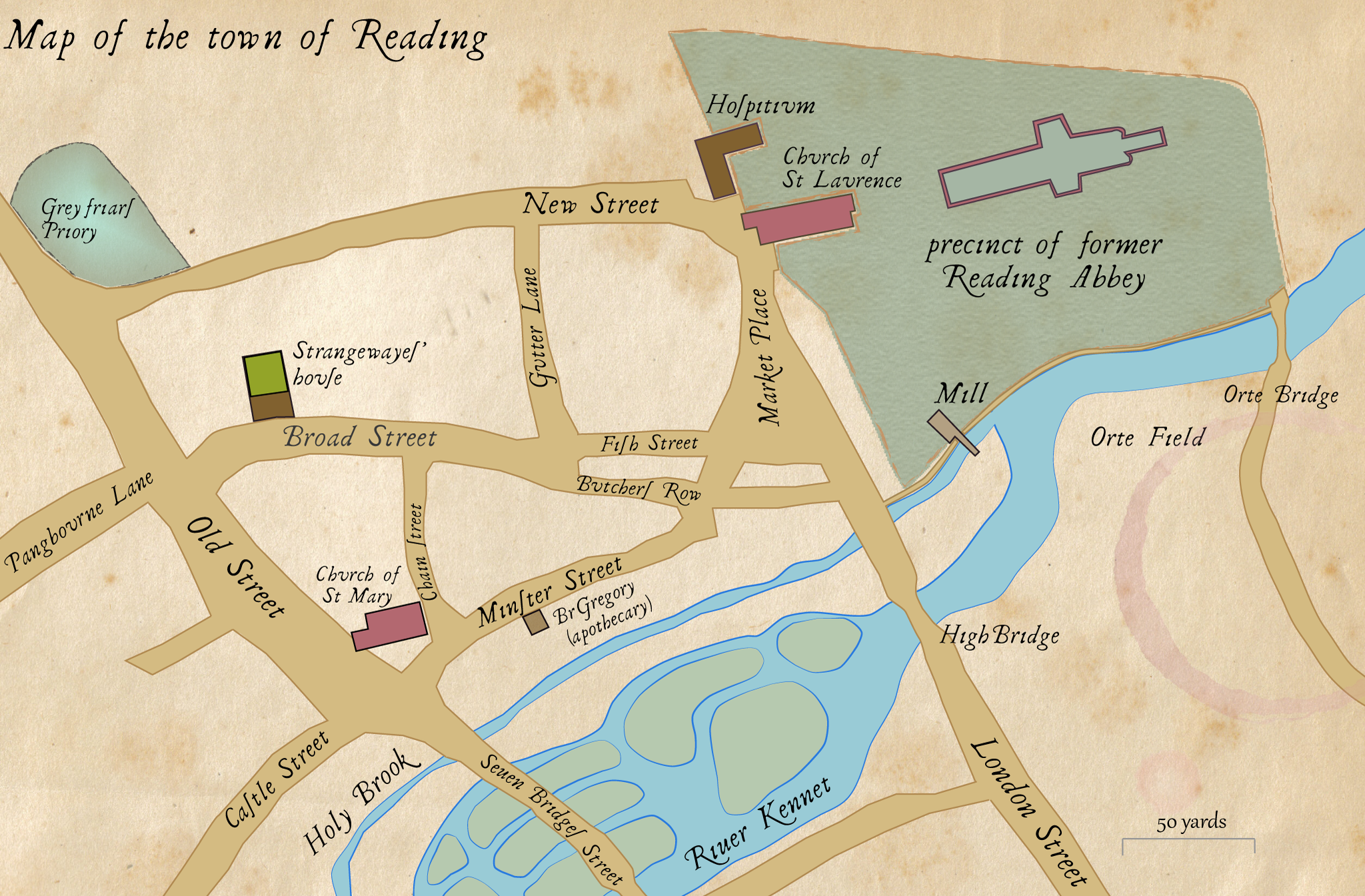
The picture below, painted by a pupil of Titian, shows my friend Andreas Vesalius performing an anatomical dissection in Padua. Padua is rare within Europe in permitting the dissection of human bodies for the teaching of anatomy to medical students at its university.
England has only two universities: Oxford and Cambridge, which are both tightly controlled by the church. Neither permits any form of dissection, as the dead are deemed to be the exclusive domain of God. The result is that doctors who graduate with an MD in England are woefully incompetent in the science and practice of anatomy. And, indeed in much of practical medicine, since there is little practical work done in the English universities.
This is one of the principal reasons why my own skills in the field, although considered by many as blasphemous, are so highly valued by those with the power and money to exploit them.